

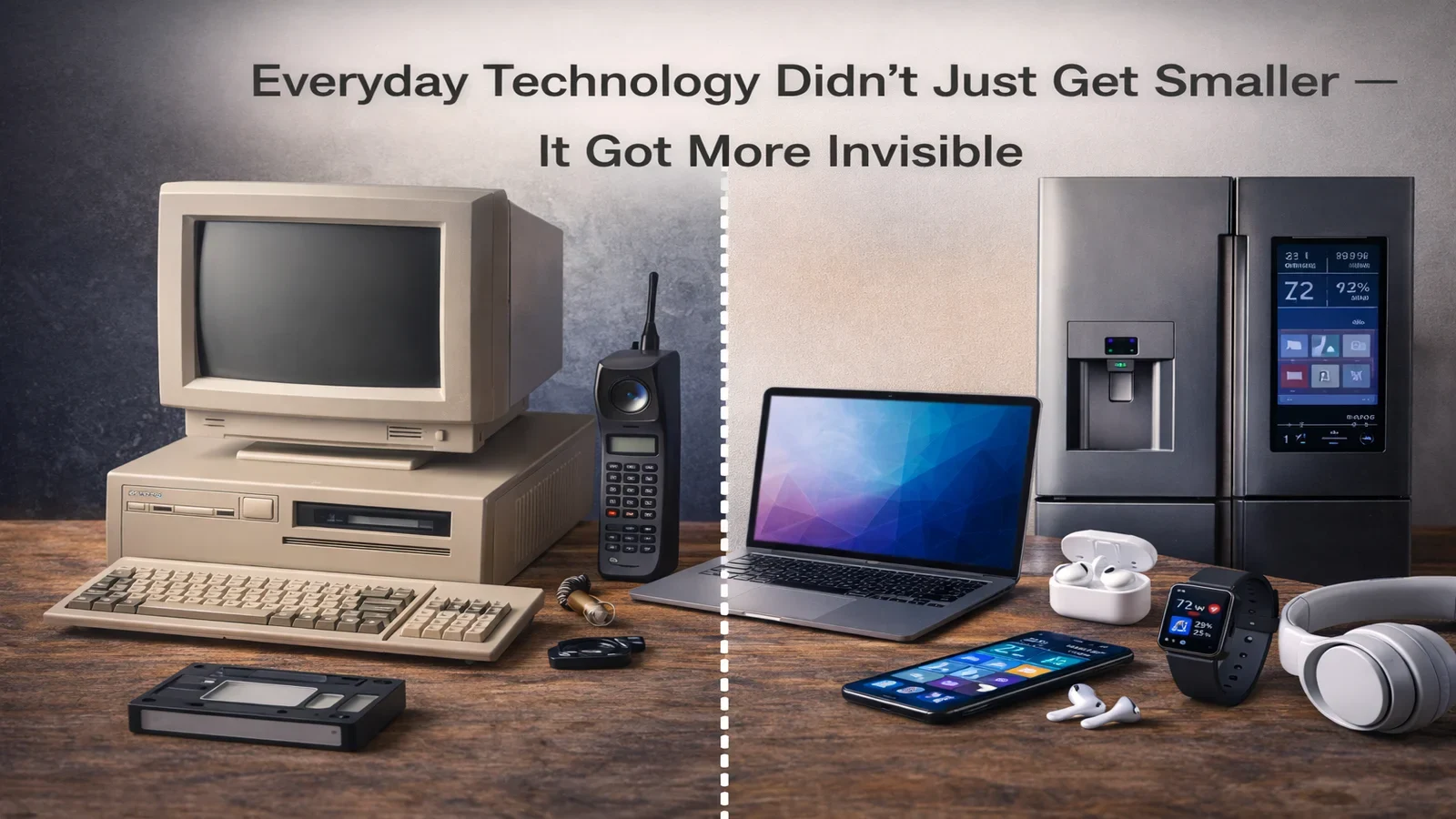
The evolution of everyday technology is often described as a story of progress, but the most important changes are easy to overlook. Devices didn’t just become faster or more powerful — they became less demanding of our attention.
Early consumer technology was explicit and intrusive. Computers occupied entire desks, phones were tied to walls, and media consumption required deliberate setup and physical storage. Using technology meant planning around it. Today, many of those same functions exist continuously in the background, embedded into objects we barely think about.
Smartphones illustrate this shift clearly. What began as separate tools — camera, music player, navigator, communicator — gradually merged into a single device that rarely announces its complexity. The same pattern appears in home entertainment, where physical formats gave way to streaming, and in household appliances that quietly optimize themselves without user input.
This evolution wasn’t driven by novelty alone. It was shaped by constraints: space, energy efficiency, cost, and usability. Each generation of devices removed a layer of friction, often at the expense of visibility and control. As technology became more seamless, it also became harder to notice — until it fails.
Understanding everyday tech means looking beyond form factors and timelines. It requires paying attention to what disappeared along the way: buttons, cables, manuals, and deliberate interaction. Those absences tell a more accurate story of progress than any headline feature ever could.