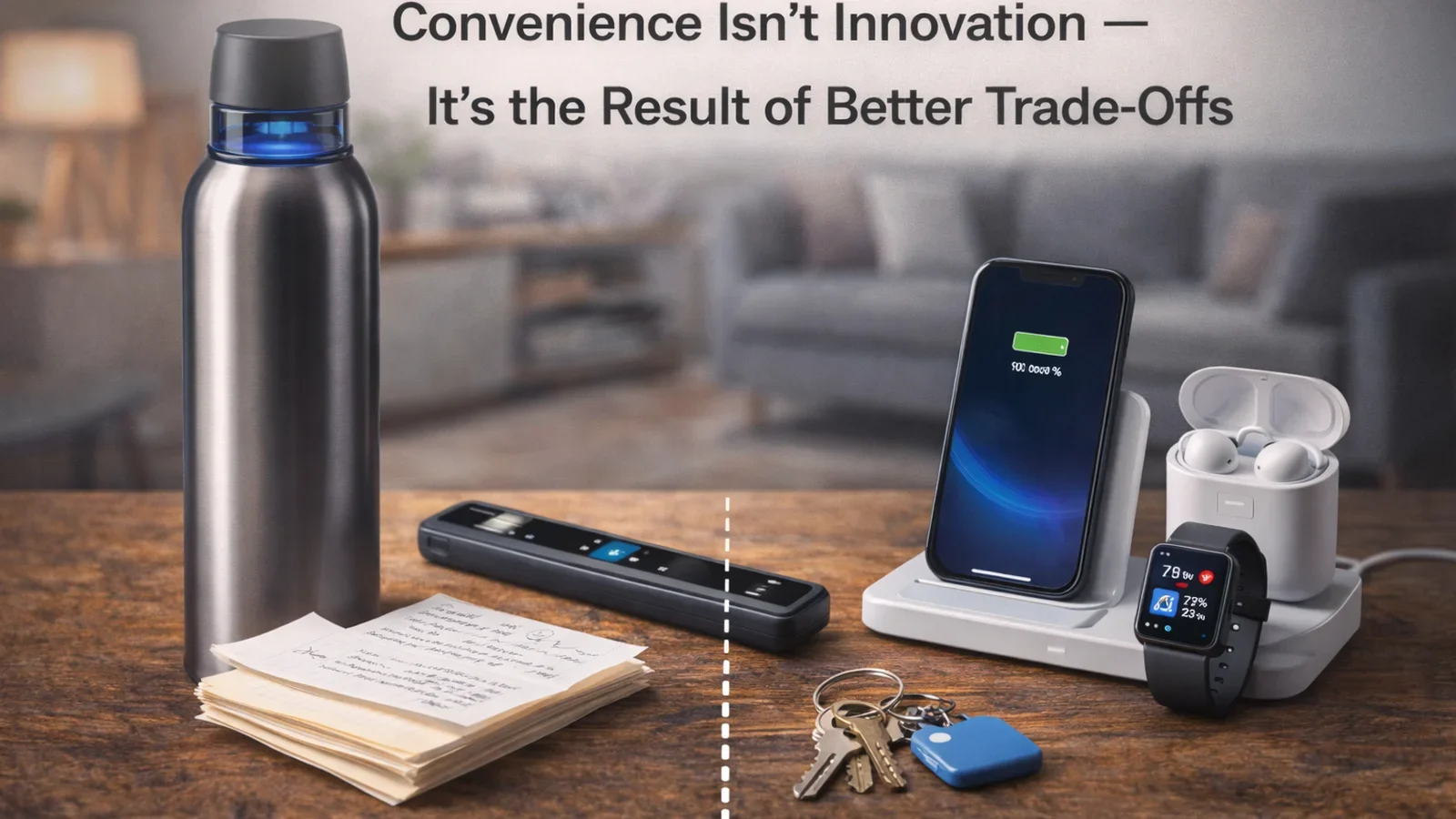
Products that genuinely make everyday life easier rarely look revolutionary. Their value tends to emerge slowly, through repeated use, rather than immediate impact. What differentiates them is not innovation in isolation, but how effectively they balance convenience, reliability, and restraint.
Many devices marketed as “smart” focus on automating small, specific tasks: tracking objects, simplifying charging, digitizing physical information, or reducing manual maintenance. When these products work well, they fade into the background. When they don’t, they add complexity rather than removing it.
The rise of automation and connected devices has amplified this tension. Smart home systems, for example, promise efficiency but often depend on stable networks, consistent software updates, and thoughtful setup. The difference between a helpful system and a frustrating one is rarely the headline feature — it’s how gracefully the product handles edge cases and failure.
Personal productivity tools follow a similar pattern. Wearables, chargers, and multi-function accessories succeed when they reduce decision-making and repetition, not when they introduce new behaviors users must learn and maintain.
Evaluating convenience-focused products requires skepticism. If a device saves time in one area but demands attention elsewhere, the trade-off may not be worthwhile. True usefulness lies in products that respect existing habits and quietly remove friction, rather than advertising themselves as solutions in search of problems..