

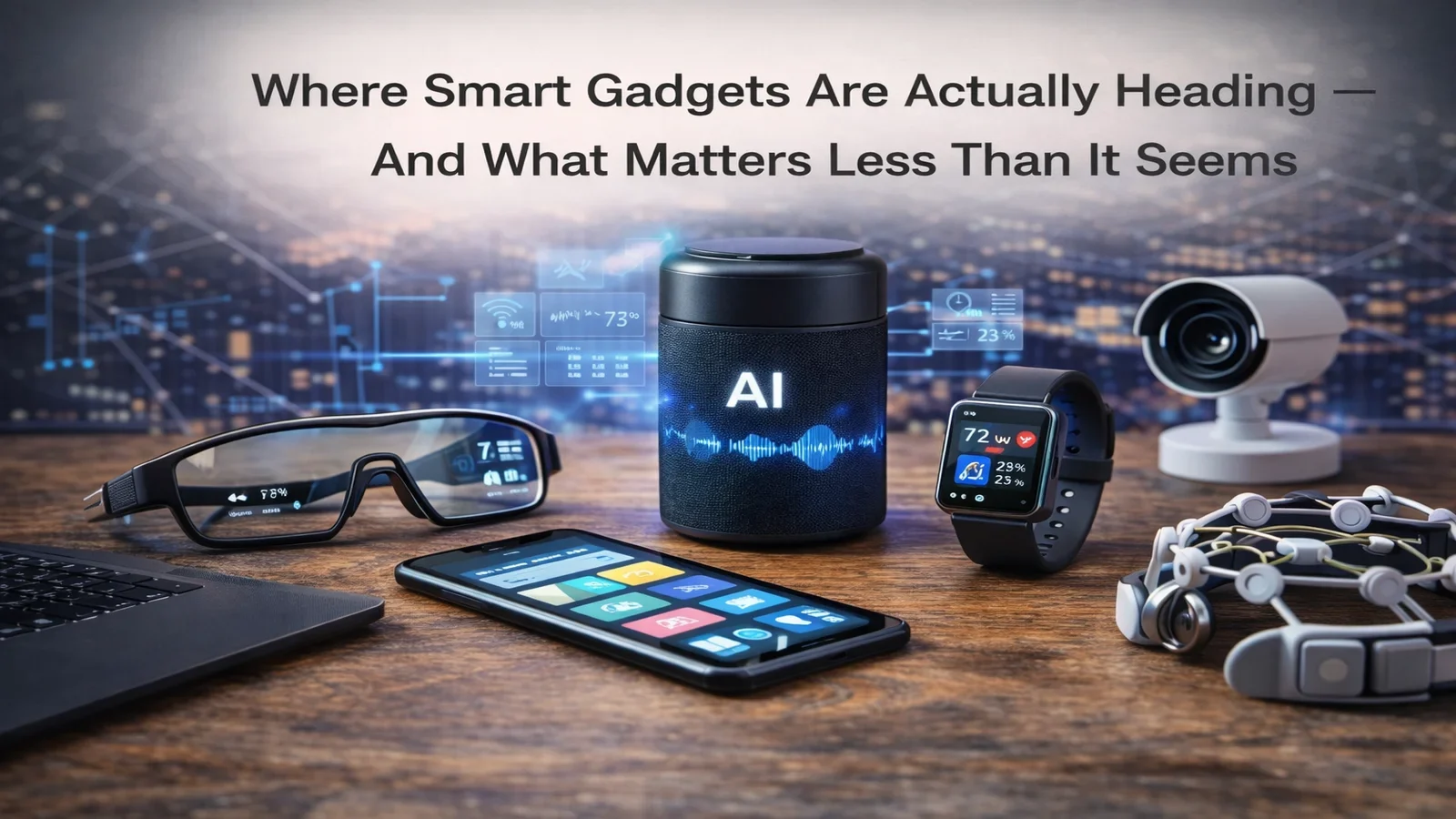
Smart gadgets are often discussed in terms of breakthroughs, but most real progress happens quietly. Rather than dramatic leaps, the category is shaped by gradual integration, cost optimization, and refinement of existing ideas.
Voice assistants, wearables, and connected home devices are no longer novel on their own. Their success increasingly depends on reliability, interoperability, and how little effort they demand from users. As these products mature, friction becomes more important than features. Devices that require constant attention or configuration tend to fall out of use, regardless of their technical capability.
Some emerging technologies receive outsized attention despite limited practical impact. Augmented reality glasses, for example, continue to evolve, but their usefulness remains constrained by comfort, battery life, and social acceptability. Similarly, ambitious concepts like brain–computer interfaces attract headlines while remaining far removed from everyday consumer contexts.
More meaningful progress is happening in less visible areas: improved power efficiency, better sensor accuracy, and tighter integration across ecosystems. These changes rarely redefine categories overnight, but they significantly influence how products feel over months or years of use.
Understanding the future of smart gadgets requires looking past novelty and asking harder questions about longevity, maintenance, and real-world behavior. Those considerations, rather than speculative promises, will determine which devices become lasting tools and which fade after initial excitement.